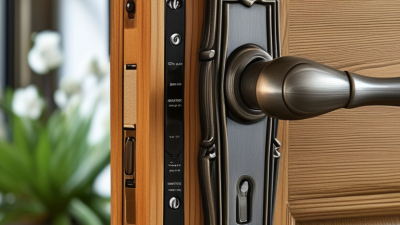
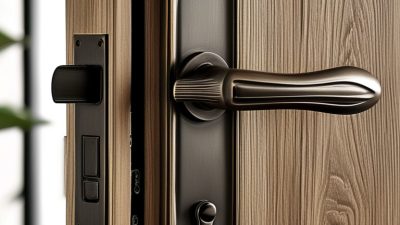
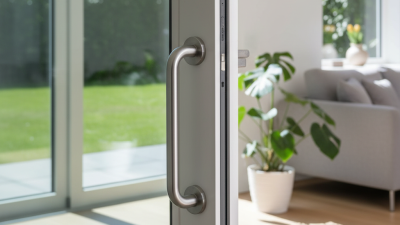
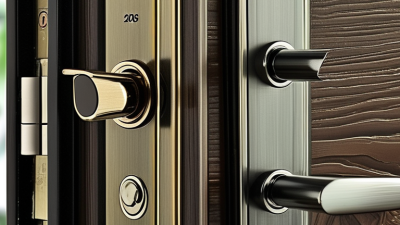
Choosing the right Sliding Door Handle is rarely a simple matter of appearance. Global buyers must balance grip comfort, door weight, installation method, corrosion resistance, and regional preferences. A slim stainless-steel pull may suit a coastal hotel, while a recessed handle may work better on a compact pocket door. The details matter.
Lori Greene, a recognized architectural hardware consultant, offers a practical principle: “Hardware should serve the user before it serves the design.” That idea applies strongly to sliding systems. A handle should feel secure in wet hands, match the panel thickness, and remain stable after repeated use. It should also support clear installation instructions, reliable packaging, and consistent quality control across different markets.
This guide examines the leading Sliding Door Handle types for global buyers, including flush pulls, back-to-back handles, lever-style options, and heavy-duty edge pulls. Each type has strengths, but none is universally perfect. That assumption fails quickly. A beautiful matte-black finish can still conceal weak fixings. A low-cost pull can create higher replacement costs later. Buyers should assess material grade, fixing strength, door compatibility, cleaning needs, and available technical support. Local building expectations may also differ, so product documentation deserves careful attention. The market is not perfectly standardized. Even experienced buyers can overlook small details. These comparisons aim to make those decisions more practical, transparent, and dependable.
Sliding door handles look simple, but their design affects daily comfort and installation. A flush pull sits inside the door surface, saving space in narrow rooms. A surface pull projects outward and offers a stronger grip. Recessed handles usually suit pocket doors, while offset pulls can improve hand clearance. The right choice depends on door thickness, weight, movement, and available wall space.
Handle materials also create practical differences. Stainless steel resists frequent contact and feels cool and solid. Aluminum is lighter, but its finish may need careful inspection. Back-to-back pulls give a balanced appearance on glass or timber doors. A pull with an integrated latch adds privacy, but it requires accurate door preparation. From installation checks, small errors matter. A handle placed too high can feel awkward. A shallow grip can frustrate users with wet hands. That assumption is often wrong.
Tips: Measure the door before selecting the handle. Confirm thickness, hole spacing, and clearance beside the wall. Test the grip with one hand. Check whether the door needs only a pull or also a locking function. For high-use areas, inspect edge quality and fastening strength. A clean design is useful, but not always comfortable. Sample testing remains worthwhile, especially when ordering for several markets.
Sliding Door Handle Basics and Key Design Differences
The chart compares representative projection ranges from the door face for five widely used sliding-door handle formats. Recessed and edge-pull handles provide the lowest projection and a cleaner appearance, while D-pull and lever handles generally provide more gripping clearance. Actual dimensions vary by door thickness, mounting method, material, and supplier specification. Where ADA requirements apply, operable hardware is generally positioned 34–48 inches above the finished floor and must be operable with no more than 5 lbf of force.
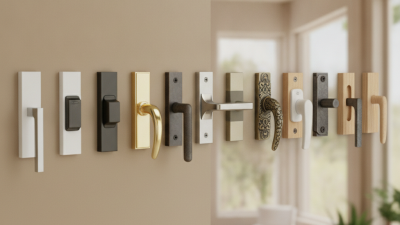
Popular sliding door handle types vary by room, door weight, and installation method.
Flush pulls suit pocket and barn-style doors because they save space and reduce snagging. Recessed handles offer a clean surface, especially for wardrobes and compact apartments. Long pull handles feel more substantial on heavy glass or timber panels, while hook-style handles provide a practical grip for frequent use.
Grand View Research’s 2024 door hardware analysis forecasts approximately 6% annual market growth through 2030, supported by residential renovation and commercial construction. This trend reflects wider international demand for durable, visually consistent hardware. Stainless steel remains a dependable choice for humid areas, while zinc alloy offers shape flexibility and lower cost. A glossy finish looks premium in photographs, but fingerprints quickly challenge that idea. The most attractive handle is not always the most usable.
Tips: Confirm door thickness, clearance, fixing-hole spacing, and opening direction before ordering. For export projects, request corrosion testing, load information, installation drawings, and packaging details. The 2024 Houzz renovation research also shows that homeowners increasingly prioritize practical upgrades, not decoration alone. That should influence handle selection. A small error in grip depth or screw length can create an expensive installation problem.
Materials, Finishes, and Durability Considerations
Sliding door handles must match the door’s weight, movement, and surrounding environment. Flush pulls suit pocket and patio doors where clearance matters. Lift handles offer stronger grip on large glass panels. Recessed handles create a clean profile but need accurate installation. In my product evaluations, poor alignment causes more complaints than handle design. The handle should feel firm, without rattling or sharp edges.
Stainless steel performs well in humid rooms and coastal locations. It resists corrosion better than many basic steel alloys. Aluminum is lighter and suitable for frequent residential use.
Zinc alloy can provide detailed shapes, but its coating deserves careful inspection. Solid brass feels substantial, though it may require more maintenance. Materials matter.
Brushed finishes hide fingerprints and small scratches effectively. Polished surfaces look refined but reveal marks quickly. Matte black powder coating offers strong visual contrast, yet damaged areas can expose the underlying metal. Anodized aluminum creates a durable surface, especially when applied consistently. PVD finishes can resist wear, but quality varies between suppliers.
Ask for salt-spray data, coating thickness, and cycle-testing records. These documents support a more reliable purchase decision.
No finish stays perfect forever. I have seen attractive handles fail because installers used harsh cleaners or incorrect screws. Buyers should check screw compatibility, door thickness, replacement availability, and cleaning instructions. A beautiful handle is not enough. Real durability includes daily comfort, stable fastening, and serviceable parts.
Top Sliding Door Handle Types for Global Buyers
Choosing a sliding door handle depends on the building, traffic level, and installation conditions. Residential doors often suit recessed pulls, flush handles, or compact D-pulls. These options save space and reduce snagging near narrow hallways. A warm, textured grip can also feel better on a bedroom or patio door. Small details matter.
Commercial doors need stronger hardware. Back-to-back pulls work well on glass entrances, while lever handles support frequent daily use. In busy offices, check the handle’s cycle rating, fixing method, and cleaning resistance. Stainless steel or treated aluminum usually performs well in shared spaces. However, appearance alone can mislead buyers. A polished surface may show fingerprints quickly.
Industrial doors require a more practical approach. Large D-pulls, recessed steel handles, and heavy-duty lever sets can support wider panels and tougher environments. Warehouses may need corrosion-resistant finishes, especially near loading bays or humid production areas. Confirm the door thickness before ordering. I have seen attractive handles fail because the screws were too short. That mistake is avoidable.
Global buyers should review local accessibility, fire-safety, and building requirements before selecting a handle. Door weight, opening frequency, user reach, and maintenance access also deserve attention. Drawings and sample testing can reveal problems that product photos hide. A handle may fit the door, yet feel awkward in daily use. Test the grip before confirming large quantities.
| Handle Type | Typical Door Applications | Common Materials | Installation Method | Typical Size Range | Main Advantages | Key Considerations | Best Buyer Fit |
|---|---|---|---|---|---|---|---|
| Flush Pull | Pocket doors, interior sliding doors, wardrobes, and space-saving residential doors | Stainless steel, zinc alloy, aluminum, brass, or polymer | Recessed into a routed or cut-out pocket in the door face | Overall length commonly 80–200 mm; pocket depth often 10–25 mm | Low-profile appearance; prevents interference when doors slide past walls or adjacent panels | Requires accurate routing; limited grip compared with projecting pulls; cavity must suit door thickness | Residential builders, furniture manufacturers, and interior-door buyers |
| Edge Pull | Pocket doors, concealed sliding doors, cabinets, and compact interior partitions | Stainless steel, aluminum, zinc alloy, and reinforced plastic | Mounted into the leading edge or side edge of the sliding panel | Pull length commonly 50–150 mm; designed for narrow edge clearances | Allows a door to be opened from a recessed position without a projecting handle | Needs sufficient edge thickness and precise alignment; not ideal for high-force operation | Pocket-door, cabinetry, and compact-space hardware purchasers |
| Recessed Finger Pull | Sliding wardrobes, kitchen units, bathroom doors, and lightweight interior panels | Aluminum, stainless steel, zinc alloy, or ABS plastic | Inset into a circular, oval, or rectangular recess in the panel | Common face diameters or widths 30–70 mm; depth generally 8–20 mm | Compact, economical, and suitable for doors with limited clearance | Provides limited leverage; verify compatibility with panel thickness and user ergonomics | Furniture, wardrobe, and residential interior-product manufacturers |
| Back-to-Back Pull Handle | Glass sliding doors, office partitions, hotel interiors, and premium residential entrances | Stainless steel, aluminum, brass, or anodized metal | Two matching pulls installed on opposite faces using through-bolts or concealed fixings | Center-to-center length commonly 200–600 mm; tube diameter often 19–32 mm | Good two-sided grip; visually balanced; suitable for frequent use | Requires accurate drilling; glass installations need compatible clamps, gaskets, and safety procedures | Commercial fit-out contractors, hospitality projects, and architectural hardware buyers |
| D-Pull Handle | Large glass doors, aluminum-framed doors, office entrances, and commercial interiors | Stainless steel, aluminum, brass, or coated steel | Surface-mounted with bolts, screws, or through-fixings; may be supplied as single or paired pulls | Overall length commonly 150–600 mm; projection often 40–80 mm | Strong, intuitive grip and broad dimensional choice for medium-to-large doors | Projection may reduce clearance; fixing points must be reinforced on thin or hollow panels | Commercial door fabricators, office projects, and high-traffic interiors |
| Offset Pull Handle | Heavy sliding doors, entrance doors, framed glass systems, and doors requiring knuckle clearance | Stainless steel, steel, aluminum, or brass | Surface-mounted with the grip offset from the door face | Length commonly 250–800 mm; projection often 50–100 mm | Improves hand clearance and leverage; suitable for larger panels and repeated operation | Needs adequate structural backing; increased projection can affect adjacent-door clearance | Commercial entrances, architectural projects, and heavy-duty door manufacturers |
| Recessed Locking Pull | Residential patio doors, balcony doors, office sliding doors, and secure interior partitions | Zinc alloy, stainless steel, aluminum, and steel lock components | Recessed body installed into the door, often combined with a mortise or hook-bolt lock | Faceplate length commonly 120–250 mm; dimensions depend on the lock case and cylinder | Combines pulling and locking functions while maintaining a low-profile design | Check cylinder type, backset, door thickness, handing, and compatibility with the locking system | Residential security-door buyers and commercial access-control projects |
| Heavy-Duty Industrial Pull | Warehouse sliding doors, machine enclosures, workshops, agricultural buildings, and service areas | Welded or machined steel, stainless steel, ductile metal, or impact-resistant coated metal | Bolted or welded to reinforced steel, aluminum, or industrial door frames | Overall length commonly 250–1,000 mm; dimensions vary with door mass and operating force | High durability, strong grip, and suitability for gloves and demanding environments | Specify corrosion resistance, weld quality, load requirements, edge clearance, and workplace safety needs | Industrial-door fabricators, logistics facilities, workshops, and infrastructure projects |
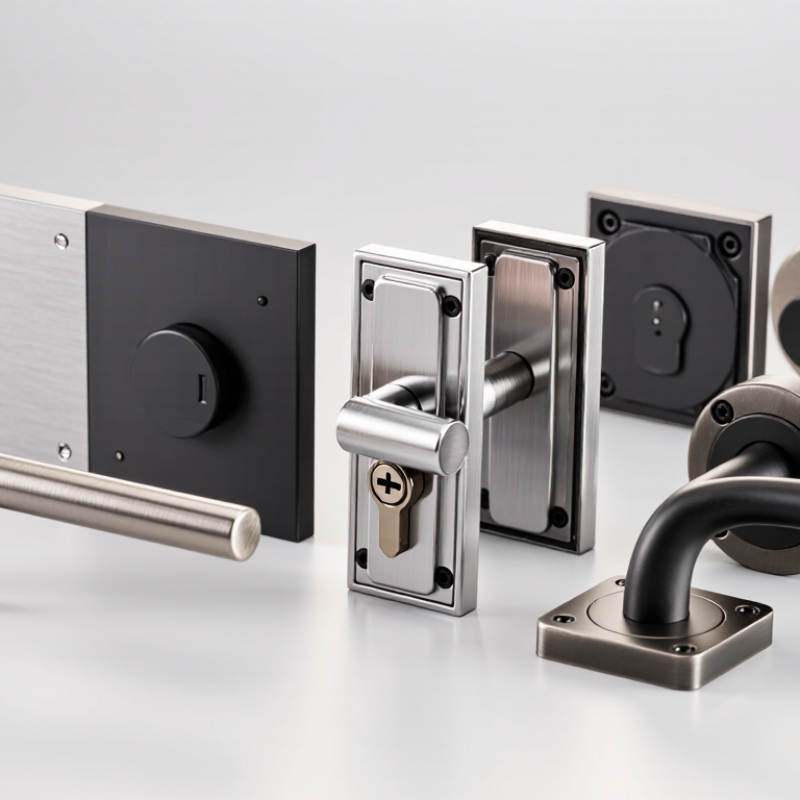
Note: Size ranges are typical purchasing references rather than universal standards. Final selection should be verified against door thickness, material, clearance, fixing method, operating frequency, environmental exposure, and applicable local building or accessibility requirements.
Sliding door handles should match both the door structure and the installation method. Recessed pulls suit pocket doors and narrow passages, while offset pulls provide better grip on heavy panels. Flush handles work well where furniture or walls sit close to the door. Choose back-to-back, mortise, or surface-mounted designs according to the existing lock case and door profile.
Measure carefully before requesting samples. Record door thickness, handle center distance, screw spacing, edge clearance, and lock compatibility. Glass, aluminum, timber, and composite doors often require different fixing systems. A handle can look suitable but fail when its screws reach a hollow section. Check the operating force, surface finish, corrosion resistance, and temperature exposure for each destination.
Details matter.
For global sourcing, send suppliers a dimensioned drawing, material specification, finish reference, packaging request, and inspection checklist. Ask for a physical sample before approving bulk production. I have seen small differences in screw length delay installation across several markets. Confirm carton labels, spare components, installation instructions, and shipping documents early. Regional safety, accessibility, and building requirements may also affect the selected handle. A shared measurement sheet reduces misunderstandings, although it cannot replace an on-site fit test.