China’s lock hardware sector has become a major sourcing base for residential, commercial, and industrial door systems. This article examines ten notable Chinese Single Point Lock manufacturers, focusing on manufacturing capability, product consistency, certifications, and export experience.
Market data provides useful context. Grand View Research reports that the global smart lock market was valued at approximately USD 2.82 billion in 2023, with strong projected growth through 2030. Mordor Intelligence also identifies Asia-Pacific as a major growth region for electronic and mechanical access-control products. These reports do not measure Single Point Lock sales directly. That limitation matters.
A practical evaluation must look beyond factory photos and catalogue prices. Buyers should review steel grade, spindle durability, cylinder compatibility, salt-spray performance, and tested operating cycles. A lock may appear solid but fail after repeated use. Small details matter, such as a loose latch spring or uneven screw holes.
Security expert Bruce Schneier offers a useful reminder: “Security is a process, not a product.” His statement applies directly to door hardware selection. A dependable Single Point Lock supports the complete door assembly, rather than acting as an isolated component. In this China-focused review, manufacturers are considered through product range, quality management, engineering depth, customization ability, and delivery reliability. Some rankings may remain subjective. That is unavoidable, and readers should verify current certificates, factory conditions, and sample performance before placing large orders.
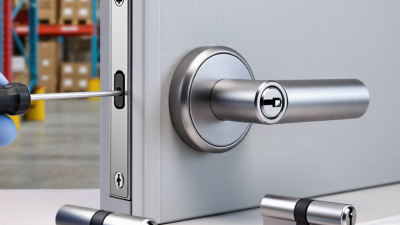
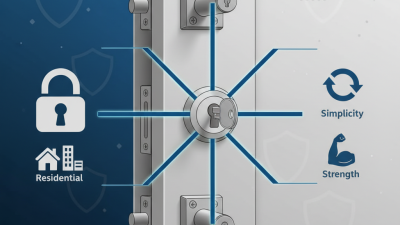
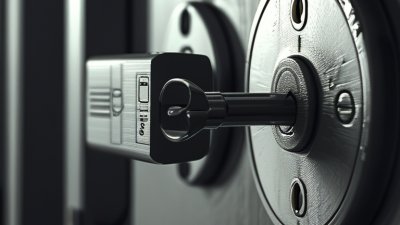
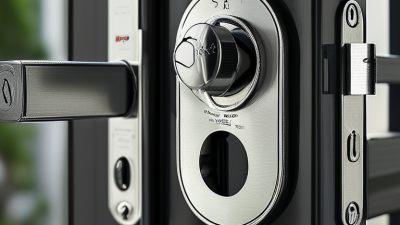
A single point lock secures a door at one location, usually through a central latch or deadbolt. Unlike a multipoint system, it does not send bolts into the top and bottom of the frame. When you turn the key, the cylinder moves a cam inside the lock case. The cam retracts or releases the latch. Pressing the handle usually withdraws the spring latch. The door then opens. When closed, the latch enters the strike plate and holds the door against the frame. Simple mechanism. This design suits interior doors, light commercial entrances, cabinets, and many standard residential applications.
A practical quality check should examine the lock case, cylinder, spring, spindle, and strike plate. The key should turn smoothly without scraping or excessive resistance. The latch should return fully after the handle is released. Small alignment errors matter. A heavy door can press against the latch and make operation feel stiff. During installation, keep the lock body level and fix the strike plate firmly. Moisture also deserves attention, especially near exterior doors. Poor surface treatment may lead to corrosion around the latch opening. A lock can be accurately machined yet still perform badly when the door frame shifts. That is an easy detail to overlook. For buyers comparing Chinese manufacturers, test samples, material records, load results, and consistency across production batches provide more reliable evidence than appearance alone. One attractive prototype proves very little.
| No. | Single-Point Lock Type | How It Works | Locking Points | Typical Door Application | Common Materials | Typical Operation | Key Selection Criteria |
|---|---|---|---|---|---|---|---|
| 1 | Cylindrical Knob Lock | Turning the knob retracts the spring latch. The key cylinder or interior button controls the locking function. | 1 latch | Interior residential and light-duty commercial doors | Steel, zinc alloy, brass, stainless steel | Key outside; knob or button inside | Backset, door thickness, cylinder format, fire-rating requirements |
| 2 | Cylindrical Lever Lock | A lever handle retracts the latch through a spindle and lock case. The cylinder or thumb-turn secures the latch. | 1 latch | Offices, apartments, schools and accessibility-focused doors | Steel, brass, zinc alloy, stainless steel | Lever handle with key or thumb-turn | Lever return, handing, accessibility compliance, cycle rating |
| 3 | Single-Cylinder Deadbolt | Rotating the key or thumb-turn extends a solid bolt into the strike plate. The bolt does not retract when the door is pushed. | 1 deadbolt | Exterior residential entrance doors | Hardened steel bolt, brass or zinc alloy housing | Key outside; thumb-turn inside | Bolt throw, anti-drill protection, strike reinforcement, cylinder security |
| 4 | Double-Cylinder Deadbolt | A key is required on both sides to rotate the internal mechanism and move the single deadbolt. | 1 deadbolt | Doors with nearby glass where interior key control is required | Steel, brass, zinc alloy | Key operated from both sides | Emergency egress rules, key control, bolt strength and local building codes |
| 5 | Mortise Single-Point Lock | A lock case installed inside the door stile operates a latch and, on many versions, a separate deadbolt through one central mechanism. | 1 central lock case | Wooden, metal and commercial entrance doors | Steel case, brass or stainless-steel faceplate | Lever or knob with cylinder and/or thumb-turn | Case dimensions, faceplate size, spindle position, door preparation |
| 6 | Rim Night Latch | A surface-mounted case uses a spring latch that automatically engages the rim strike when the door closes. | 1 latch | Wooden doors and retrofit entrance applications | Steel, cast metal, brass or zinc alloy | Key outside; handle or turn snib inside | Auto-latching behavior, cylinder type, night-latch function and door alignment |
| 7 | Euro-Profile Cylinder Lock Case | Rotating the compatible profile cylinder drives the latch or deadbolt inside the lock case. | 1 central case | European-style residential and commercial doors | Steel lock case, brass or nickel-plated cylinder | Key, thumb-turn or compatible access cylinder | Cylinder length, cam position, lock-case dimensions and door handing |
| 8 | Glass-Door Patch Lock | A compact lock clamps or mounts to tempered glass and engages a floor, wall or frame strike without drilling the glass. | 1 latch or bolt | Frameless tempered-glass doors | Stainless steel, brass, aluminum, elastomer gaskets | Key cylinder, thumb-turn or access-control module | Glass thickness, tempered-glass compatibility, strike alignment and load rating |
| 9 | Electric Single-Point Strike Lock | An electrical solenoid or motor changes the strike position so an authorized signal permits the latch to release. | 1 latch position | Controlled-access office, apartment and institutional doors | Stainless steel, steel, copper coils and engineering plastics | Card, keypad, intercom or exit-device signal | Voltage, fail-safe or fail-secure mode, duty cycle, current draw and fire listing |
| 10 | Electronic Single-Point Smart Lock | A motorized gearbox moves one latch or deadbolt after authentication by keypad, credential, mobile device or biometric reader. | 1 latch or bolt | Residential, rental, office and hospitality doors | Zinc alloy, stainless steel, steel, ABS or polycarbonate | PIN, RFID, Bluetooth, NFC, fingerprint or mechanical key | Power source, emergency override, encryption, audit trail, connectivity and retrofit fit |
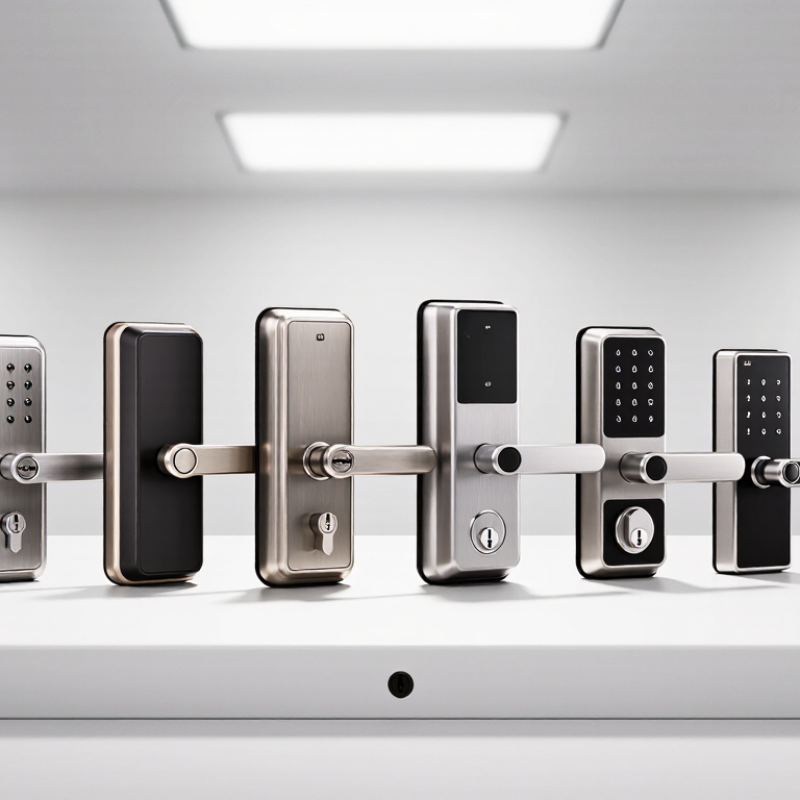
Evaluating Chinese single point lock manufacturers requires more than comparing quotations. A 2024 MarketsandMarkets report projects the global access-control market to grow from about USD 10.3 billion in 2024 to USD 14.9 billion by 2029. This growth increases supplier pressure, but it does not prove consistent quality. Ask for factory audit records, process-control charts, and recent batch-testing results.
Material selection deserves close inspection. Request the exact grade of steel, zinc alloy, spring, and cylinder components. A reliable supplier should explain coating thickness, corrosion testing, and latch-cycle performance. EN 12209 provides useful benchmarks for mechanically operated locks. Check whether test reports identify the same factory, model, and production revision. A copied certificate is not enough.
Visit the assembly line if possible. Watch workers measure latch movement and inspect key alignment. Ask how many samples are tested from each production lot. The 2023 ISO Survey recorded more than 1.5 million valid ISO 9001 certificates worldwide, showing certification is common, not exceptional. Certification helps, but it cannot replace product evidence. I would also compare five samples from different cartons. Small differences matter. One supplier may offer excellent prototypes, then change springs to reduce cost. That risk is easy to miss. Require written change-control rules, traceable inspection records, and a clear remedy for failed batches. The evaluation should include packaging strength, spare-part availability, lead-time history, and communication after an order leaves the factory.
China’s leading single point lock manufacturers differ in scale, specialization, and production discipline. Their profiles reveal more than product catalogs. They show how factories manage material selection, machining accuracy, surface treatment, and quality inspection.
One profile represents a large integrated producer with automated stamping lines and in-house testing. Another focuses on stainless steel locks for humid coastal buildings. A third serves furniture and cabinet manufacturers with compact, low-force mechanisms. Some factories specialize in aluminum doors, while others develop locks for interior woodwork.
Several combine export experience with customized drilling patterns and cylinder options. One smaller manufacturer stands out for flexible minimum orders and fast sample revisions. Another emphasizes strict dimensional checks at every assembly station. A long-established workshop contributes practical knowledge, though older equipment may limit consistency. A newer facility offers digital traceability but has a shorter record. The final profile reflects a trading-and-manufacturing model, useful for broad sourcing but requiring careful factory verification.
Real purchasing experience shows that appearance can mislead. A smooth handle does not prove reliable internal performance. Buyers should request material certificates, load-test records, salt-spray results, and batch inspection reports. Sample testing matters.
The ranking also needs reflection. Public information may be incomplete, and factory capabilities can change quickly. A manufacturer may perform well on standard locks but struggle with unusual dimensions. Regular audits, clear drawings, and independent inspections remain essential for dependable sourcing.
China’s top ten single point lock manufacturers should be compared by evidence, not catalog size. Stainless steel bodies resist corrosion in coastal projects, while zinc alloy reduces cost for interior doors. Brass cylinders offer a heavier feel but usually raise unit prices. According to MarketsandMarkets’ Smart Locks Market report, the global smart-lock sector may grow from about USD 2.2 billion in 2023 to USD 4.4 billion by 2028. This trend also increases demand for stronger mechanical backup locks.
Applications reveal practical differences. A basic single point lock may suit bedroom or office doors, while fire-rated, high-traffic, or outdoor doors need tested assemblies. Check latch cycle results, salt-spray hours, cylinder security, and door-thickness range. EN 12209 is useful for mechanical lock performance; ANSI/BHMA A156.13 may matter for commercial projects. ISO 9001 supports process control, but it does not prove product strength. That distinction is often missed.
Pricing varies with material, finish, cylinder grade, packaging, and order volume. A realistic China FOB range is roughly USD 1.50–4.00 for economy zinc-alloy models, USD 4.00–10.00 for stainless-steel models, and above USD 10.00 for reinforced commercial versions. These are working estimates, not quotations. Request test reports, sample measurements, and batch inspection records. I would also question unusually low prices. They may reflect thinner plates, weaker springs, or incomplete certification evidence. A small sample can expose problems that a polished product sheet cannot.
How to Select the Right Chinese Single Point Lock Supplier
China offers many single point lock manufacturers, but supplier selection requires more than comparing prices. Grand View Research reported that the global smart lock market reached about USD 2.7 billion in 2023, showing stronger demand for reliable access hardware. However, single point locks still depend on mechanical precision, material strength, and consistent assembly. Samples can mislead.
Request factory evidence, not only product photographs. Check ISO 9001 procedures, incoming material records, production inspection, and batch traceability. Ask for test results covering cycle durability, corrosion resistance, load performance, and emergency operation. Where relevant, confirm compliance with EN 12209 or other destination-market standards. A credible supplier should explain test methods clearly.
Review the lock body, spindle, spring, cylinder interface, and fixing screws. Stainless steel or treated steel may perform better in humid environments, but the finish must match the installation site. Ask for a pre-production sample and inspect five to ten pieces from one batch. Differences in spring tension or latch movement deserve attention. Do not trust the cheapest quotation blindly. It may exclude tooling, packaging, testing, or replacement parts. According to Intertek’s 2023 quality research, weak supplier controls remain a major source of product inconsistency in global manufacturing. Factory audits, video inspections, and written acceptance criteria reduce that risk, although none removes it completely.